

9 Checks on an Old Northampton County House

In this post
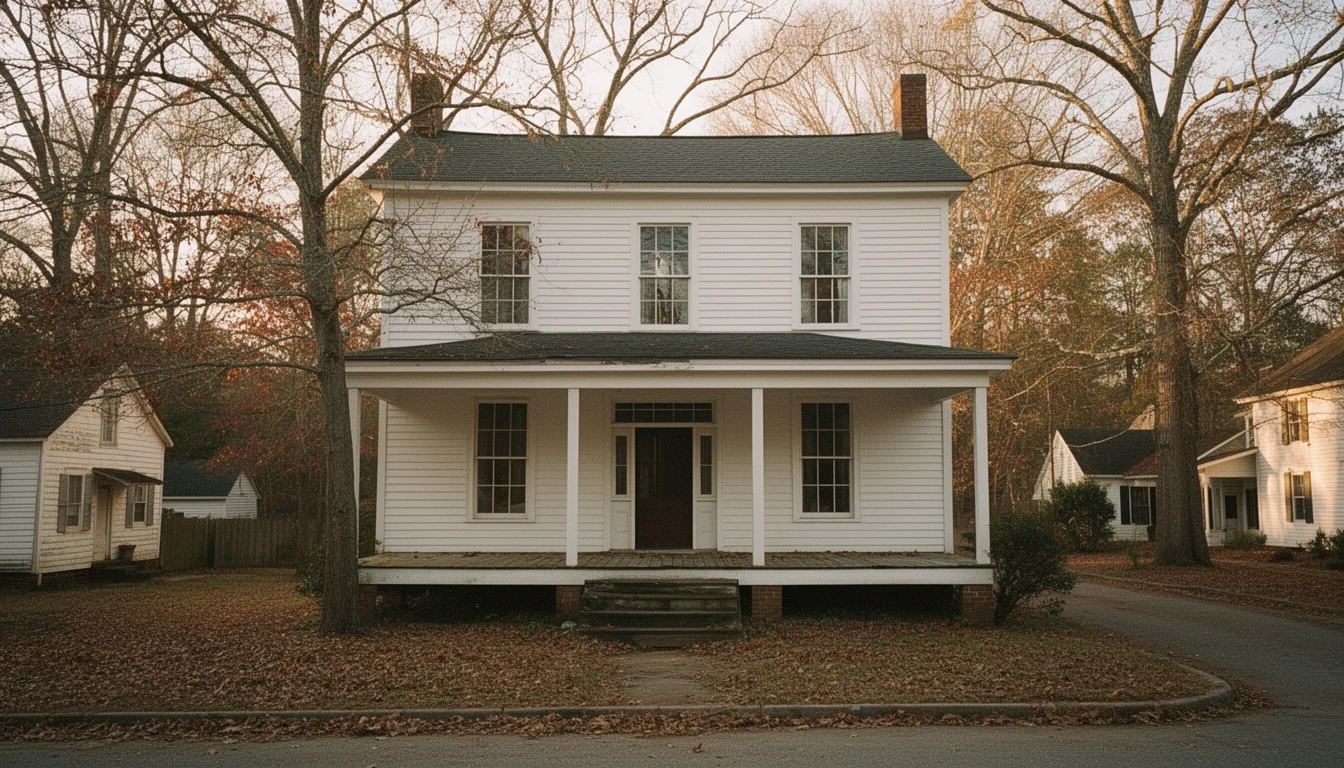
The porch on West Jefferson Street in Jackson still has its original beaded ceiling, painted so many times the bead reads soft. The floorboards give a little underfoot. The screen door slaps, and the whole house smells like dust and old shellac.
That house was built before anyone in Northampton County thought to photograph a house. Most of what’s for sale inside a town here is like that. The county holds 17,471 people across roughly 537 square miles, and no town in it works as a hub, so the old houses sit where the railroad and the courthouse put them and stay in the same family for three generations.
Old is not the problem. Uninspected is. Here are the nine checks I’d run, in the order I’d run them.
1. The panel, and what’s behind the walls
Start at the service panel and work backward. Knob-and-tube wiring shows up in houses wired before 1950: two separate conductors run through porcelain tubes in the joists, with no ground. It works. It also has sixty more years of heat cycles on it than it did when it was installed, and the insulation on it is cloth and asphalt.
Aluminum branch wiring is the other one. Single-strand aluminum was used in American homes mainly between 1965 and 1973, and the Consumer Product Safety Commission has documented far more fire-hazard conditions at its connections than with copper. You can spot it by the silver color and the “AL” stamped on the jacket.
Neither one means walk away. Both mean you need an electrician’s number in your budget before you make an offer, and you need to know what your insurer will say about it.
2. The sills and the crawl space
In a house this old, the floor system is probably heart pine resting on brick piers, and the sills are the beams sitting closest to the ground. Everything that shortens the life of a house in this county starts in that damp dark: a crawl space with no vapor barrier, gutters dumping at the foundation, termites working up from the soil.
Eastern subterranean termites are active throughout this part of North Carolina. A recent treatment receipt is worth more than a seller’s assurance, and a crawl space you can stand up in with a plastic barrier and working vents is worth real money at resale. Get under there yourself and look at the wood where it meets the masonry.
3. The flues
Before there was central heat, every room here had a chimney, and a lot of those chimneys were built for coal and later hooked to a wood stove or a furnace. An unlined brick flue cracks. A cracked flue puts carbon monoxide in the living room.
Ask for a Level 2 chimney inspection, which means a camera run through the flue, not a look from the hearth. If the chimney is capped and unused, that is fine, but get it in writing that it isn’t venting anything. And count the flues: a house with four chimney stacks and one working furnace has three openings that need to stay sealed.
4. Paint on anything built before 1978
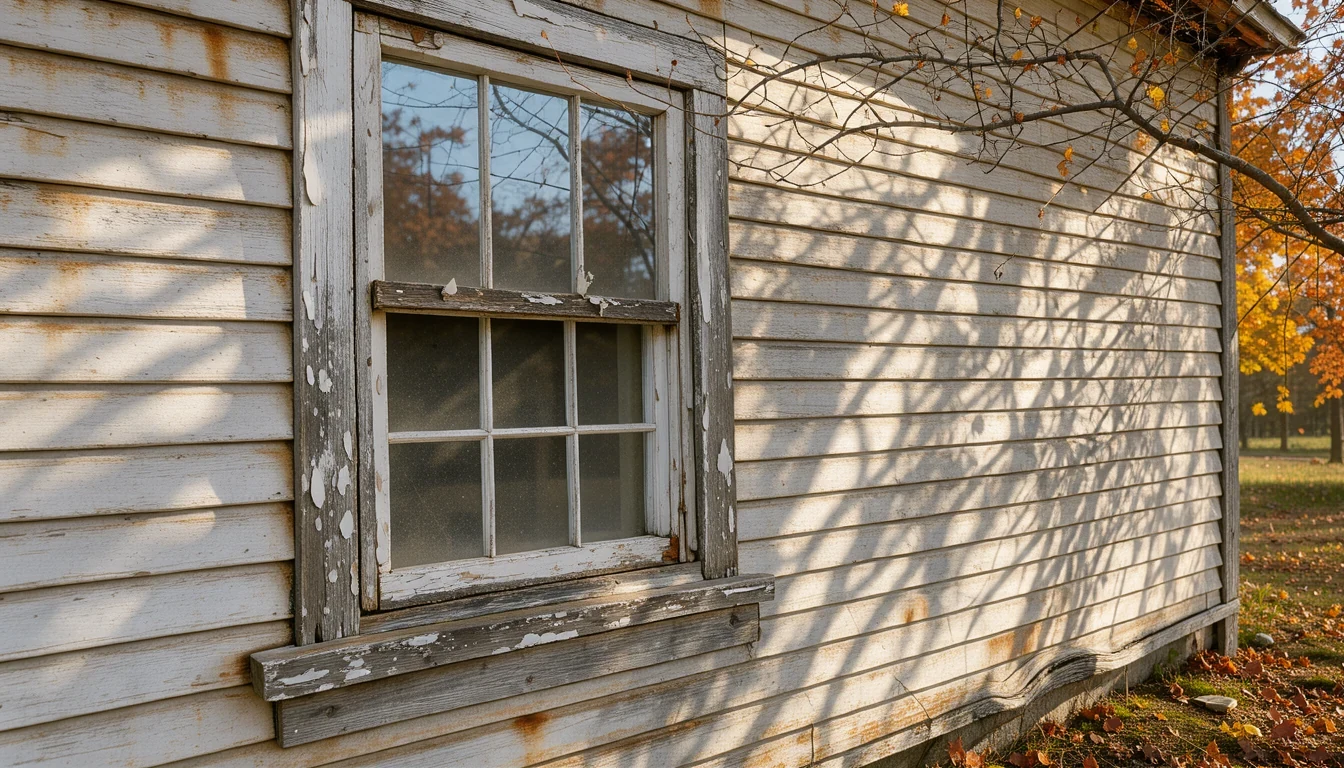
Federal law requires a lead-based paint disclosure on any sale of housing built before 1978, and every house on this list qualifies. The disclosure is a piece of paper. The reality is the windows, the porch railing, the door jambs, and the exterior trim, all of which have been painted a dozen times.
Renovation work that disturbs paint in pre-1978 housing falls under the EPA’s Renovation, Repair and Painting rule, fully effective since April 22, 2010. That means a certified firm and lead-safe practices when you start scraping a porch. Budget for it, or budget for a swab test on the trim you plan to touch.
5. The roof, and the deck under it
A metal roof on a hundred-year-old house here is usually standing seam or the old 5V crimp, and either can outlive the next owner if it was installed over solid decking. The failure I see is a metal roof screwed down over skip sheathing with no underlayment, which works until it doesn’t.
Ask what’s under the metal. If the answer is “the old shingles,” that’s three layers of dead weight and a deck you can’t inspect. Asphalt shingle roofs on these houses run 15 to 25 years in this climate, and a “new roof” with no receipt is a rumor, not a fact.
6. The windows
Original wood double-hung windows with wavy glass are the reason these houses look the way they do. They are also, honestly, terrible at holding heat. The good news is that a 1900 window with a storm sash performs about as well as a mid-grade replacement, and it keeps the house’s face intact.
The bad news is the ones that were replaced in the 1980s with vinyl inserts, poorly flashed, which is where I find rot in the framing around the opening. Pull the interior trim on one window on the weather side and look at the framing.
7. The permit file
Small towns and old houses produce additions that were never permitted: a bathroom tucked into a back porch, a carport closed in, a second kitchen for a relative. The work may be fine. The record matters at resale and at insurance.
Northampton County handles building inspections out of the office at 126 E. Jefferson St. in Jackson, and the number is 252-534-5171. Ask what permits were pulled on the parcel and when. If the answer is nothing since 1994, you now know to look harder at the wiring in that back addition.
8. Water and waste, by address
Inside Jackson, Rich Square, Conway, Seaboard, Woodland, Gaston, or Garysburg, you likely get town water. A mile outside the line you get a well, a pump, a pressure tank, and a septic drainfield, all of it yours to maintain.
Test the water for bacteria and nitrates before you close, and have the septic tank pumped and inspected rather than “certified” by the seller. A failing drainfield is a five-figure repair in a county where the soils are heavy clay in places, and it is not a surprise you want in month three.
9. The grade and the old well
Walk the lot after a hard rain, or ask a neighbor what happens in one. Old houses here often sit on a slight rise with the yard graded toward the house by a century of added topsoil. Gutters that dump beside the foundation undo everything the crawl space barrier is doing.
Look, too, for a hand-dug well or a cistern that was abandoned in place. They turn up as a concrete circle in the side yard or a pipe stub in the yard. An abandoned well has to be properly sealed, and that is a real line item, not a curiosity.
Nine checks don’t fix everything, though.
None of this solves the resale question. The buyer pool for an old house in a county of 17,471 people is thin, and a house on a shaded street in Jackson can sit a season while a newer place outside town moves first. Underwrite the exit before you fall for the porch.
Insurance deserves its own conversation, and it isn’t one I can have for you. An unlined flue gets read one way by one carrier and another way by the next. So does fifty-year-old wiring. Call an agent with the address before you call a moving truck.
Do the nine checks and what’s left is a house the rest of the state stopped building a hundred years ago, on ground that still gets farmed, in a town where the courthouse has stood since 1858. That is a specific thing, and it isn’t for everyone.
If you’re looking at an old house in Jackson, Rich Square, Seaboard, or anywhere else in this county and want the inspection list walked through against a specific address, call and we’ll go through it room by room.
Keep reading
Utilities in Northampton County: Who Turns On What
Two electric utilities, six county water systems, town water, and fiber that stops at the driveway: what actually turns on in Northampton County.
15 Signs a Northampton County Small Town Is Worth Betting On
Fifteen signs a Northampton County town is worth betting on, sorted into four tests you can run yourself before you write an offer on a house or a tract.
Well and Septic on Northampton County Land
What it takes to get a well and a septic system approved on Northampton County land: the permits, the tests, the fees, and what can stall a closing.