

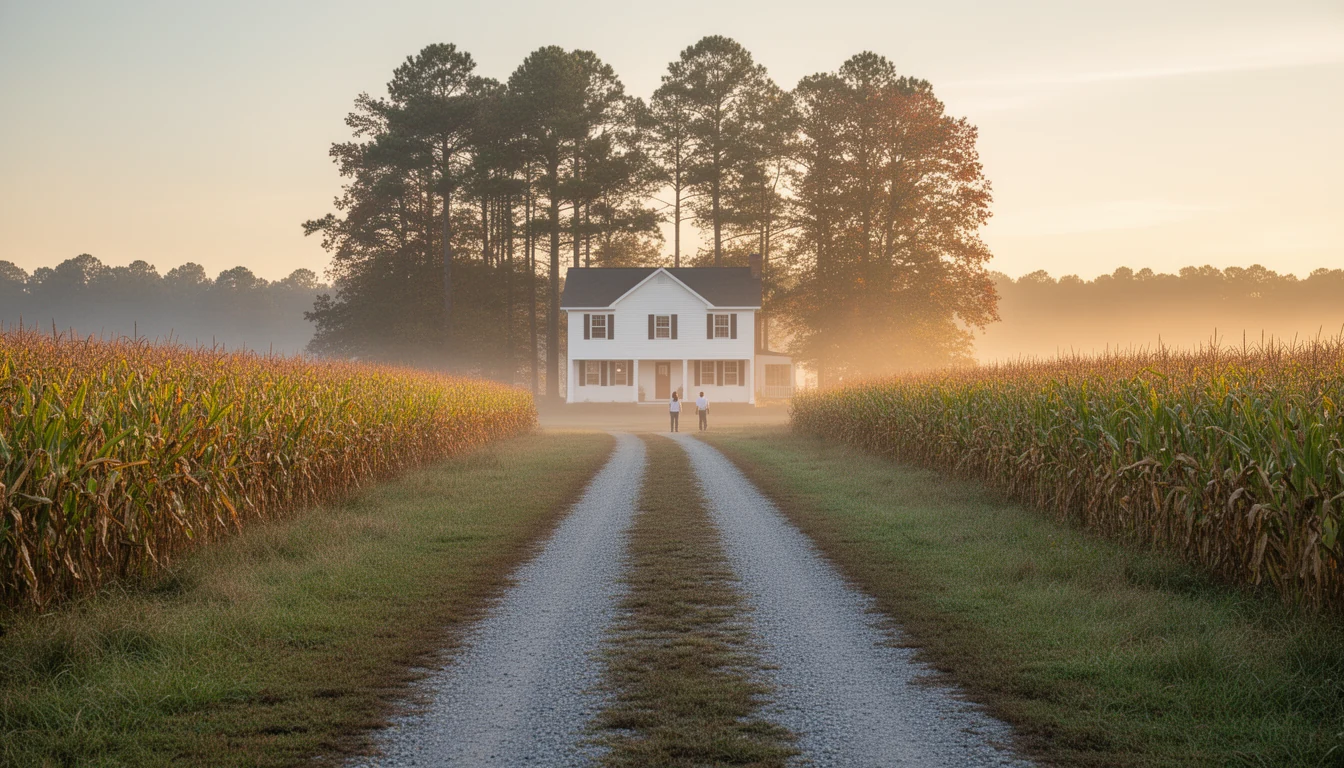
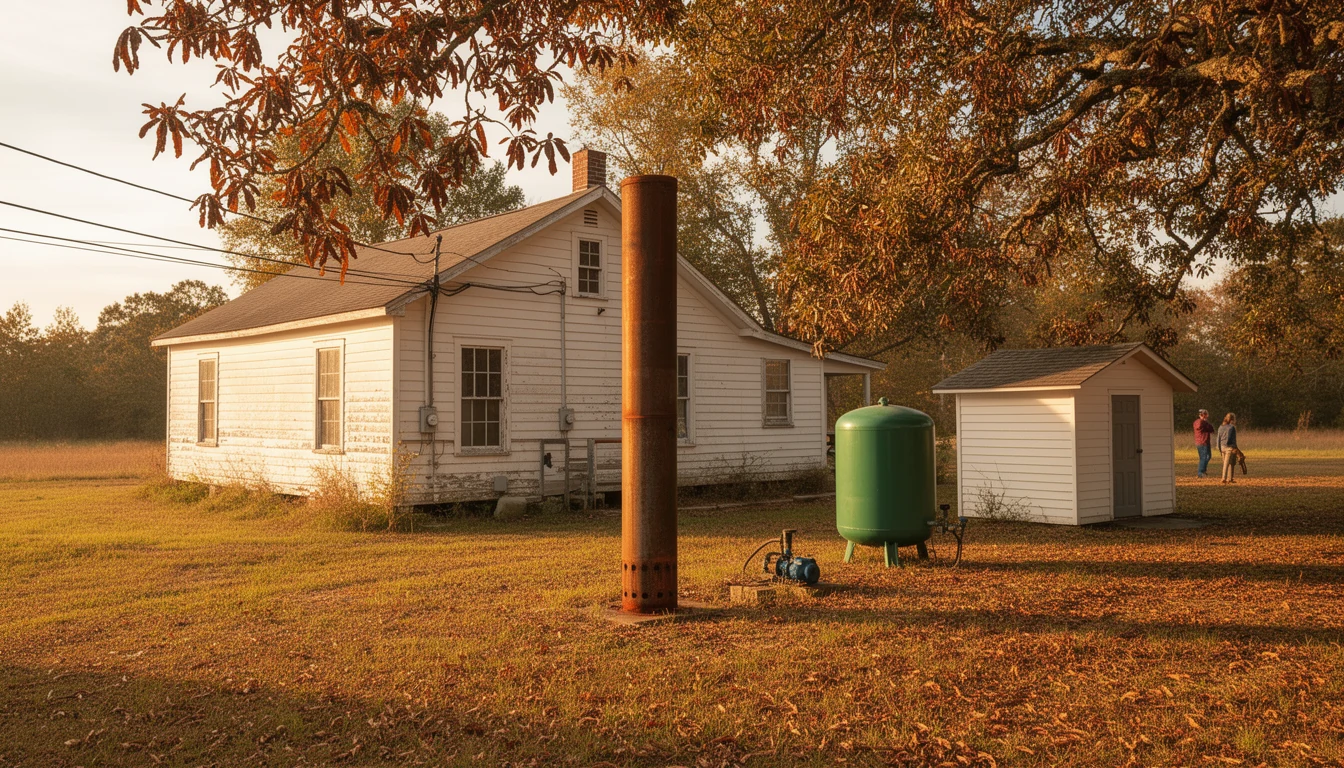
Standing on a farm lane off NC 305 north of Jackson, you hear the pump before you see it: a low click and hum from the pump house behind the soybeans, then water landing in a pressure tank. That pump is the reason the house at the end of the lane exists. Out here, water and waste don’t come from a town. They come from a hole in the ground and a drainfield in the side yard, and the county has to agree that both will work before anyone builds.
That’s the part of buying rural Northampton County land that catches people off guard. Price per acre is easy to compare. Whether your acre will pass a soil evaluation is not, and it’s the question that decides whether the lot you like is a building site or a hay field with a better view.
Start with the county health department, not the lender
Most Northampton County land outside the incorporated towns runs on private wells and septic systems. Jackson, Rich Square, Conway and Seaboard each operate their own public water systems inside the town limits. Cross those lines and the county Environmental Health office in Jackson is the agency that decides what you can build and where you can put it.
That office sits at 9495 NC 305 Highway and keeps hours of 8:30 in the morning to 5 in the afternoon, Monday through Friday. Almost everything below runs through it, so if you’re shopping land, that’s your first phone call rather than your last.
The septic side: three permits, and one number you can’t change later
North Carolina’s onsite wastewater rules, 15A NCAC 18E, took effect January 1, 2024, the state’s first major rewrite of its septic rules in more than three decades. The permit sequence didn’t change:
- The Improvement Permit comes first. An environmental health specialist walks the site, digs soil borings, and evaluates topography, landscape position, soil texture and soil wetness. If the site works, the permit states what kind of system fits and how much wastewater it can handle.
- The Construction Authorization approves the specific design for installation, and it depends on the Improvement Permit staying valid. An Improvement Permit runs up to 60 months, so most buyers have room to close, build, or hold the land for a while.
- The Operation Permit comes after the system is installed and inspected. That’s the document that proves what is actually in the ground.
Here’s the part buyers miss. The Improvement Permit fixes the bedroom count. If the soil supports a three-bedroom system, you can build a three-bedroom house, and adding a fourth bedroom later means going back to the health department. On a lot with marginal soils, that single number can change what a property is worth to you.
Soil is the whole ballgame in the coastal plain. The state rules require separation between the drainfield trenches and the seasonal high water table; the rules speak in terms of keeping the groundwater mound two feet or more below the bottom of the trenches. Northampton’s soils run wet in places, and where the water table sits high, a conventional gravel trench won’t pass. You’re looking at a mound system or an engineered design instead. Those systems work fine. They cost more to install, and they take up more of the yard, including a reserved repair area you can’t put a shed, a pool, or a driveway on.
The well side: one permit, and a set of distances
A private drinking water well in North Carolina needs its own permit. Under 15A NCAC 02C .0303, the application goes to the local health department for the county where the well will be located. Under .0304, no person may construct a private drinking water well without first obtaining that well construction permit. The same office that signs off on your septic system signs off on your well, which is a good reason to plan them together rather than one at a time.
The rules also set separation distances, and they matter most on a small lot:
- 50 feet between a well and a single-family home’s septic tank and drainfield, including the drainfield repair area
- 100 feet between a well and animal barns, feedlots, or chemical storage areas
- 25 feet between a well and a building perimeter
When the well is finished, the health department inspects it and issues a Certificate of Completion that includes an as-built drawing. Ask for that drawing. It shows the casing depth, the grout, and where the well actually sits, which is information you want before you set a fence post or lay a driveway.
The water tests, and when they happen
A new well isn’t usable as a drinking water source until it’s tested. Bacterial and chemical tests have to be run within 30 days of well completion, through the North Carolina State Laboratory of Public Health by way of your local health department, or through a state-certified commercial lab.
Northampton County’s own fee schedule for 2026-2027 lists $50 for a bacteriological sample, $50 for nitrate and nitrite, and $150 for a full panel. On a land purchase with drilling in front of you, that money is small next to finding out later that the water needs treatment.
For an existing well, the state recommends testing on a schedule: coliform bacteria every year, heavy metals, nitrates, nitrites, lead and copper every two years, and pesticides and volatile organic compounds every five years. It also recommends testing after any repair to the well, the pump, or the plumbing, and after a flood.
This isn’t a formality in this part of the state. The state health department’s own guidance notes that many wells in North Carolina have too much lead, arsenic, iron, manganese, low pH, or harmful bacteria. A well that runs clear is not the same as a well that passes.
What actually stalls a closing
Timing, almost every time. The site evaluation has to be scheduled, and in the wet months the water table can force a second look before the county will commit to a system type. Then there’s the contractor market. Only so many certified well drillers and septic installers work this county, and they’re booked around harvest and around building season, so a permit that takes two weeks to issue can still sit for a month waiting on a crew.
Four things worth doing before you sign anything on raw Northampton land:
- Order the site evaluation before you write the offer, or write the offer contingent on an approvable Improvement Permit. North Carolina doesn’t require a seller to hand you a septic evaluation on undeveloped land. That risk is yours to manage, and a soil report is cheap compared to a lot you can’t build on.
- Ask the county for the record on the parcel, not just the seller’s account. If there’s a house on the land, ask for the Operation Permit and the well’s Certificate of Completion. If there’s an older home sitting empty, ask when the system was last inspected and whether the tank was ever pumped or abandoned.
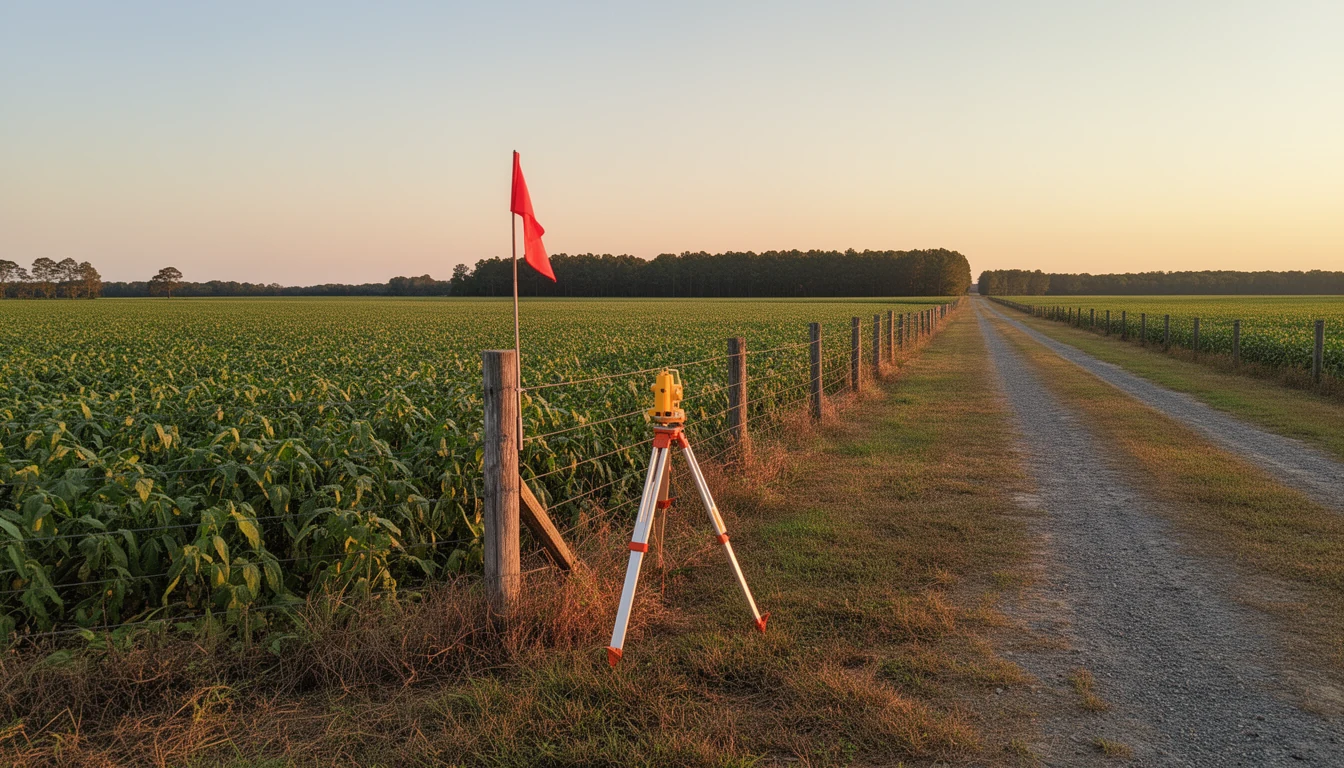
- Check the deed and the plat against what’s on the ground. Northampton land records reach back to the 1700s, and hand-written metes-and-bounds descriptions don’t always match today’s fence line or the driveway the last owner put in. A survey is how you find that out while you still have leverage.
- Talk to your lender early. USDA and most rural land programs will want an approved wastewater permit and a clean water test before they close, and an appraisal on land with no permitted water or waste is its own conversation. Some lenders also want their own inspection or test of the existing well and septic system.
The honest math
Private water and waste is not free. A conventional septic system, a drilled well, the pressure tank and wiring, the permits, and the treatment equipment that iron or low pH sometimes requires can add up to more than a municipal connection would cost, and all of it has to be in place before a certificate of occupancy. The drainfield repair area is permanent reserve you don’t get to use for anything else.
What you get back is real too. No water bill and no sewer bill climbing every year, no town connection fee, no waiting on a line that may never reach your road, and the freedom to put a shop, a barn, or a garden where a subdivision covenant would say no.
If you want a number instead of a range, the county fee schedule and one call to the Environmental Health office will give you one. If you want a straight read on whether a specific Northampton parcel will pass, that’s a conversation worth having before you fall for the view. Travis Old and the Horizon team have pulled well and septic records on land in this county, worked with the office in Jackson, and walked these farm lanes for years, so you’ll get an honest answer about what the ground will take instead of a sales pitch.
Start with the land and farm chapter of the full brief for how acreage, timber and present-use-value fit together, or browse current Northampton land listings to see what’s on the market right now.