
15 Signs a Northampton County Small Town Is Worth Betting On

In this post
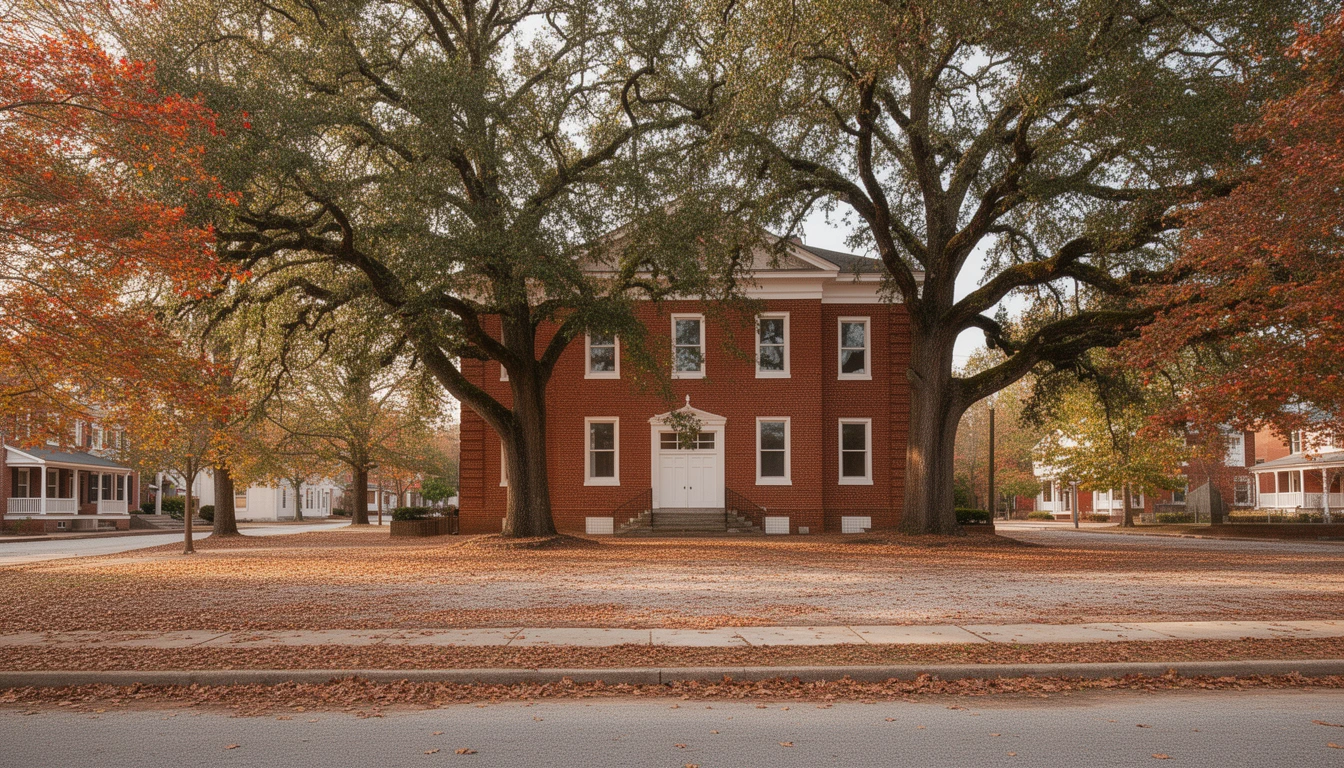
On a Tuesday morning in Jackson, the square in front of the 1858 courthouse does more to explain this county than any listing sheet. Federal and Greek Revival buildings face each other across roughly 110 acres. Most of them went up between 1825 and 1953. The people crossing that square are the county’s real economy, on foot.
Northampton County holds 17,471 people across about 537 square miles, with no town that works as a regional hub the way Roanoke Rapids or Ahoskie does. So a town here either carries its own weight or it doesn’t, and you can usually tell which within an hour of driving through it.
Fifteen signs, four tests. Run them before you write an offer on a house, a tract, or a lake lot.
The morning test
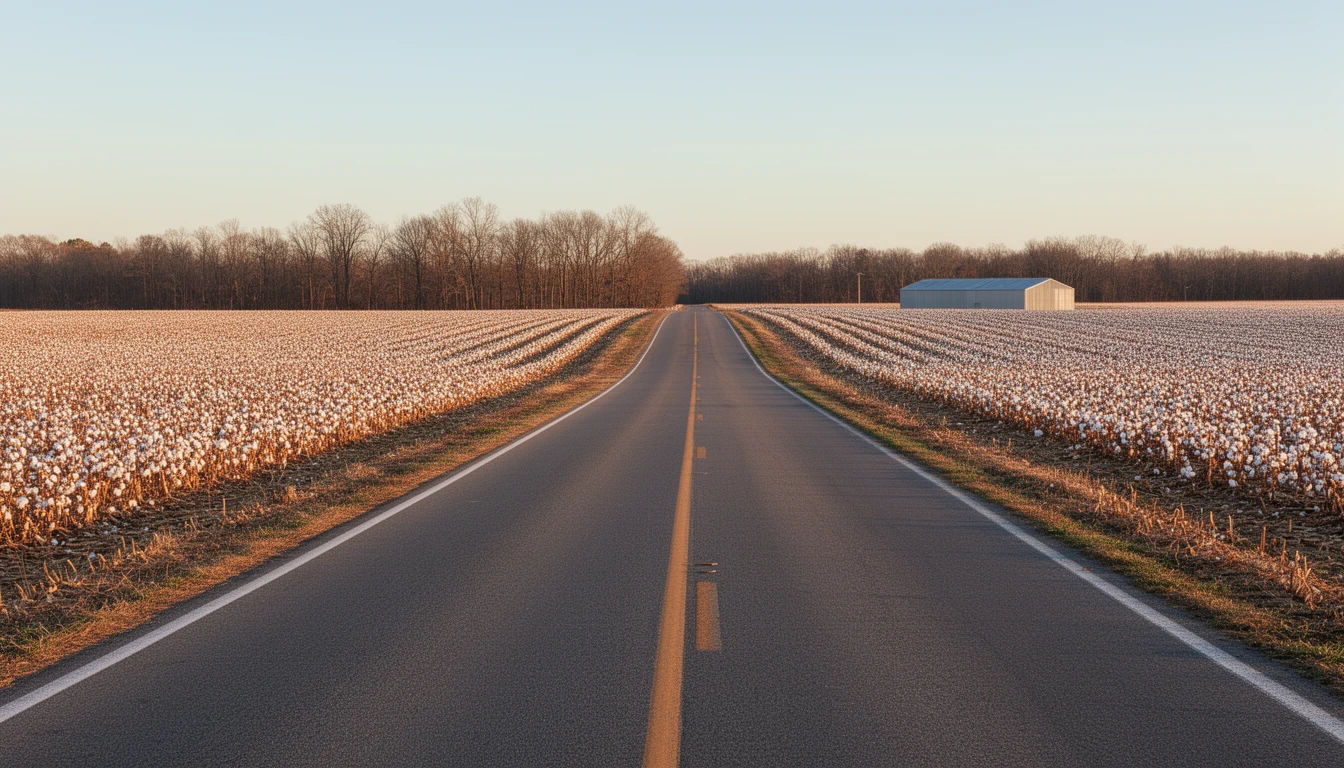
- Work is already happening at 6:45 a.m. Cotton, peanuts, soybeans and corn run the tillable ground here, with timber on the wetter stretches. If the lots around town are full of trucks before daylight, the ground is being farmed by people who live on it, and working land prices differently from land held on speculation.
- A school bus turns around inside the town limits. The county operates six schools for roughly 1,291 students. Where a route reaches, a district pays attention. Ask the district office which school serves the address you’re considering, because nothing on a map of a six-school district is as intuitive as it looks.
- There’s a well-worn route to the health department. Every parcel outside a town line here runs on a private well and a septic system. The environmental health office sits at 9495 NC 305 Highway in Jackson, and a new residential septic permit starts at $300 for a two to four bedroom house, with well construction at $300. A buyer who has already priced those numbers isn’t surprised in month two.
- The town sells its own water. Jackson, Rich Square, Conway and Seaboard each operate their own public water systems. Inside those limits you get a water bill and a sewer connection. A mile outside the line you get a well pump and a drainfield, plus every service call on your own dime. Neither setup is wrong. Only one of them arrives by mail.
The civic test
- The fire department raises its own money. Rural departments lean on fundraisers in a way that city departments never have to. Call your insurance agent and ask what the fire district’s rating does to a premium on a specific address. The answer is both a sign about the town and a line in your closing costs.
- The library keeps its own hours. A branch with posted hours and a shelf that has changed since your last visit is a small town spending money on itself. A branch with a note taped to the door is telling you something too. Drive past twice before you decide.
- A parking lot is full on a Wednesday evening. Not Sunday morning. Wednesday. Midweek turnout means people aren’t driving out of town for their social lives, which is the habit that hollows out small places over a decade.
- Something meets there that isn’t a government body. Athletic boosters, a civic club, a rescue squad auxiliary. Read the bulletin board at the post office and the counter at the store. Whoever runs those meetings is who you’ll call in year three when you need a well dug or a roof patched.
The ground test
- Farm ground sells to farmers. In a county this rural, acreage moves mostly between operators and land investors rather than to a steady stream of newcomers. When a neighboring tract goes to the family that already farms the road, that’s a functioning local land market and a fair sign for the town at the end of it.
- The tax office can explain present-use value without looking it up. North Carolina taxes qualifying farm and forest land on its value in current use, not on full market value. It isn’t automatic. The owner applies and requalifies, and taking land out of qualifying use can trigger a rollback tax with interest. If you’re buying an enrolled tract, ask what your plans would trigger before you trust the tax figure on the listing.
- The Register of Deeds can pull the chain of title quickly. Ask for the deed and the recorded plat on any tract or old house you like, then look for pins that match the plat and a chain without gaps. Land that has passed through an estate in this county can carry questions that only a title search answers, and a seller who welcomes that search is a seller with nothing to hide.
- The health department answers the phone the same day. It’s a small office with a published fee schedule, and the staff know the soil in each part of the county. A fifteen-minute call on a Monday tells you more about your buildable area than a season of browsing listings.
The road test
- The interstate is minutes away and not in your window. I-95 crosses about 7.5 miles of this county before it leaves North Carolina, and Exit 180 at NC-48 near Garysburg sits roughly 1.5 miles south of the state line. That’s a real commuter position, so long as you aren’t buying the lot that backs up to it.
- You can say your hospital run out loud. There’s no hospital inside the county. The nearest hospital-level care is ECU Health North in Roanoke Rapids, 204 beds and roughly 18 to 19 miles from Jackson by way of US-158, about a 29-minute drive on a normal day. Say that drive time to yourself on a bad night and decide if you mean it.
- Your errands carry addresses in two states. Emporia, Virginia is about 18 miles up the corridor. Roanoke Rapids sits about the same distance south through Jackson. Two directions, two labor markets, two sets of stores. Drive both before you pick a side of the county.
What the signs still don’t tell you
A town can pass every test on this list and still not hand you a grocery store, a hospital, or a short drive to work. Errands here route to Roanoke Rapids or across the line into Emporia, and that’s the shape of living somewhere this rural rather than a flaw in any one town.
The second thing the list can’t fix is resale. Housing stock in a courthouse town is old, and the buyer pool is thin. A 1900s house on a shaded street in Jackson can sit for a season while a newer build outside town moves first. Underwrite the exit before you fall for the porch, and get an inspection that looks hard at wiring, foundation movement and roof structure.
If you can live with the drive and the slow exit, what’s left is quiet ground at a price the rest of the state stopped offering years ago, in a county that still works for a living. That’s the whole bet.
If you’re weighing two towns in Northampton County and want the drives, the tax questions and the health department files sorted out before you commit, reach out and we can walk through it address by address.
Keep reading
Utilities in Northampton County: Who Turns On What
Two electric utilities, six county water systems, town water, and fiber that stops at the driveway: what actually turns on in Northampton County.
Well and Septic on Northampton County Land
What it takes to get a well and a septic system approved on Northampton County land: the permits, the tests, the fees, and what can stall a closing.

13 Drives to Time in Northampton County
Thirteen drives to time before you buy in Northampton County: the hospital runs, the courthouse errand, the I-95 crossings, and the honest miles.